
How and why do living things move?
E.E. Cummings once wrote that he was “abnormally fond of that precision which creates movement”. While he was thinking about how word arrangements and sentence structure can be organized for effect in poems, he was right that for something to have life, it needs to move.
We study how the precise regulation of the actin cytoskeleton, a self organizing macromolecule and its binding proteins, leads to the emergent phenomenon of motility. We use a combination of microscopy, molecular techniques, and computational approaches to elucidate function across length scales from molecules to organisms.
Why motion?
Life is a series of dynamic, emergent processes, each greater than the sum of its parts. Cellular motility is an example of an emergent process–not completely controlled by any one protein, macromolecular complex, or system.
The cells in our body move during wound healing, cancer metastasis, and embryonic development. Unicellular free-living protists such as amoebae move to explore their environment, find food, and escape predation. This motion is both an intrinsic process and the functional output of various environmental influences. Cells construct a variety of motility apparatus from the complex macromolecular machinery of the flagellar motor to dendritic actin networks. While the flagellar motor is a self-assembled rotary engine, dendritic actin networks are dynamically assembled, self-organizing, force generating distributive molecular motors formed from the coordinated assembly of actin filaments that push on membranes.
Vermamoebae vermiformis by Raquel Villasenor-Garcia
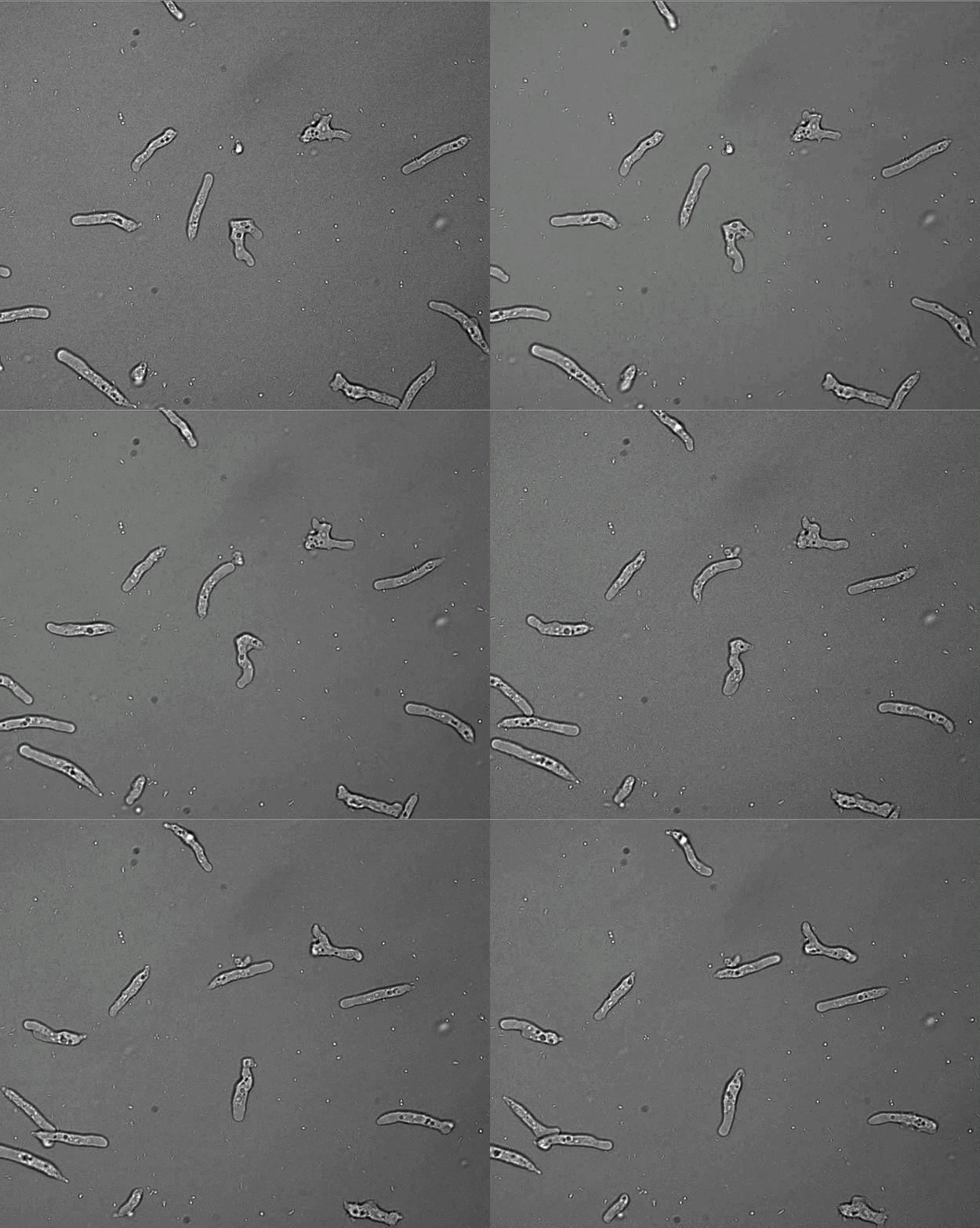
Imaging Naegleria gruberi on RICM microscope built in-house by Sierra Johnson. RICM shows where cells adhere to the glass surface (Top: Brightfield/RICM; Bottom: RICM alone)
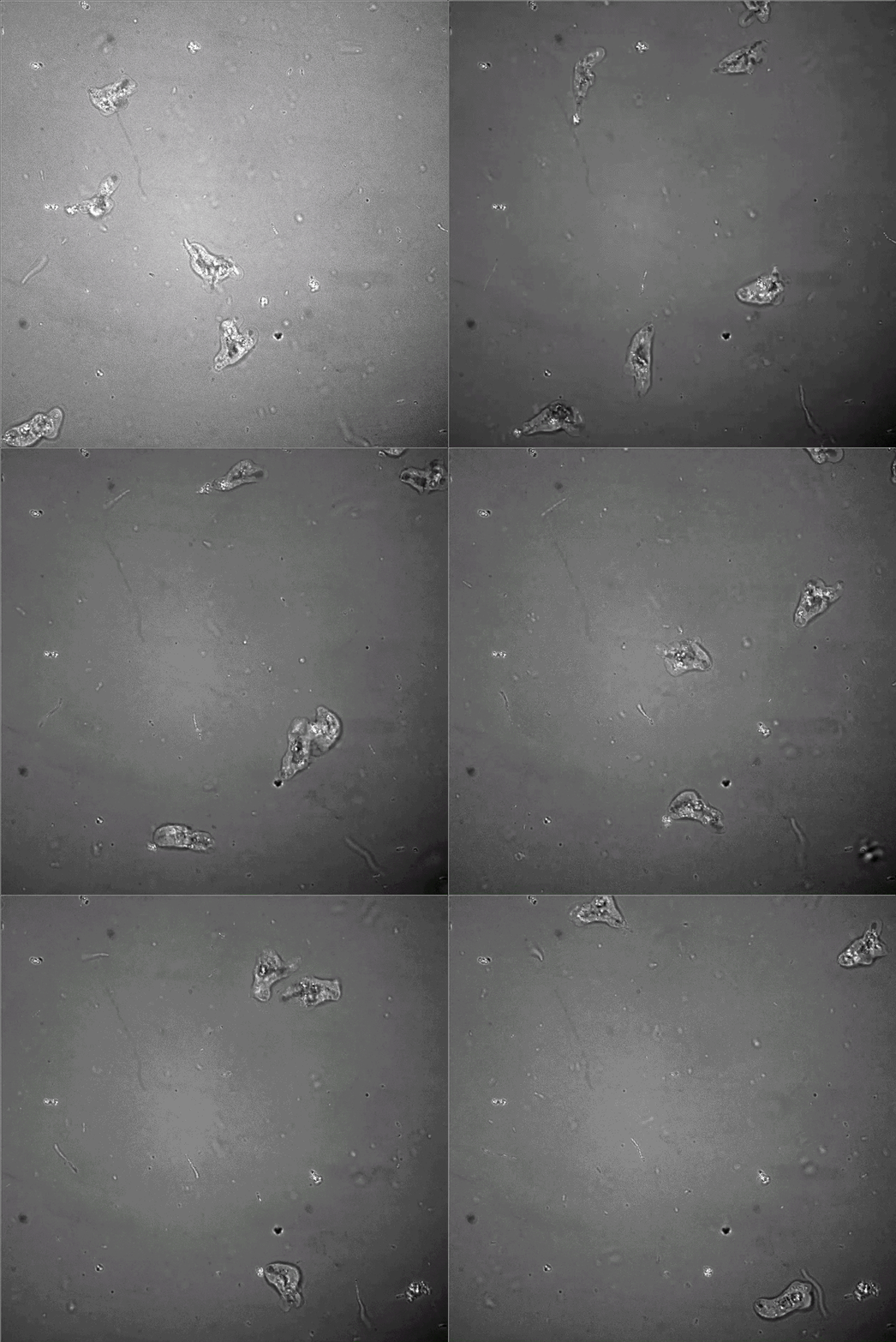
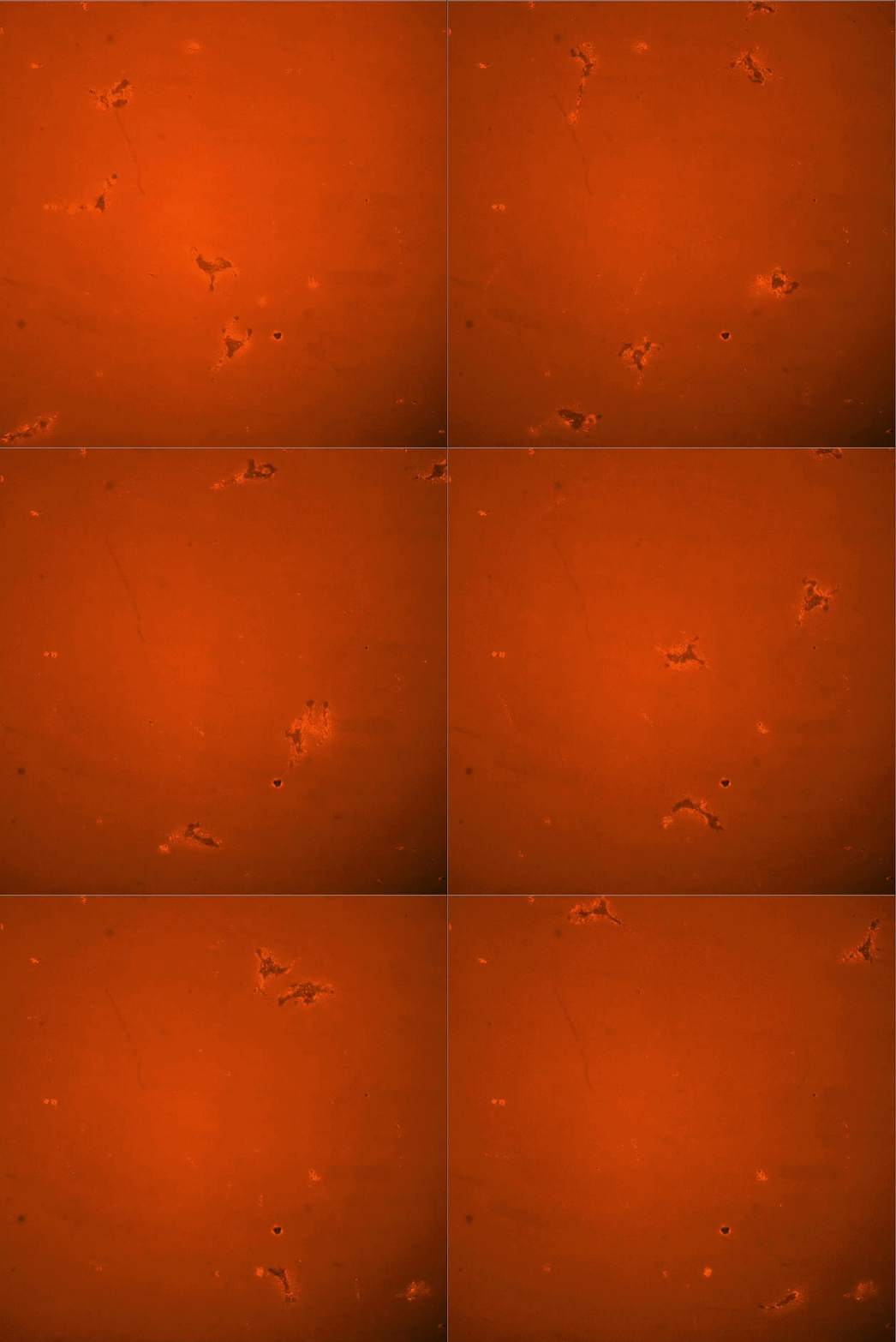
Actin network assembly: While actin monomers can spontaneously form filaments upon addition of ATP and salt, in a cell, actin polymerization is tightly controlled and regulated by hundreds of binding proteins. Polymerases like nucleation promoting factors for the Arp2/3 complex dictate where and when actin assembles. These proteins share a conserved domain structure with high homology regions for binding both naked actin monomers and monomers bound to profilin. We are interested in how minor differences in this domain structure can tune actin network architecture and dynamics.
Intracellular membrane dynamics: How does actin maintain and organize organellar membranes? Organelles such as mitochondria are dynamic, constantly assembling and disassembling. We investigate how actin polymerization contributes to dynamics on both the cytoplasmic face and lumenal/matrix-facing side of the membrane.
Amoeboid motility: Across length scales from proteins to mammals, form is related to function. Amoeboid motility is a type of motion named for a constant change in shape. Both free-living single-cell protists and human cells utilize this type of motility, driven alternately by cytoplasmic pressure or the force of actin polymerization. We investigate the crawling motility of both unicellular and metazoan cells and how the actin cytoskeleton drives their movement.